


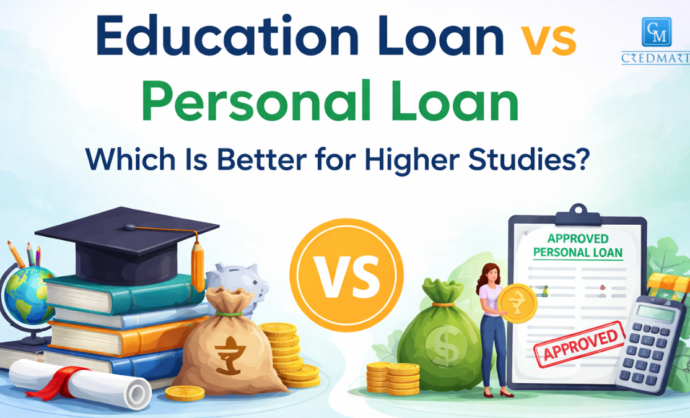
Choosing between an Education Loan vs Personal Loan is a common challenge for students planning higher studies. With rising tuition fees and living costs, selecting the right type of loan can make a big difference in long-term financial stress. Understanding how education loans and personal loans work will help you make a smarter decision.
Getting an education is a really big deal when it comes to money. You have to think about where you want to study whether it is in India or in another country. The costs of things, like tuition fees and accommodation and travel and books and everyday living costs can add up quickly. Higher education is something that you have to plan for because these costs can rise really fast.
Most families do not have the money to pay for everything at once. This is where education financing comes in. Many students and their parents want to know if they should get an education loan or a personal loan to pay for college. An education loan is a big decision, and education financing can help with that. Education loan or personal loan—which one is better for studies? is a question that many people ask.
Although both can help fund education, they function very differently. Understanding these differences can help you make a smarter decision.
What Is an Education Loan?
An education loan is made to help people pay for college or university. Banks and other places that lend money give these loans to students who are taking classes in schools that are recognized in India or in other countries.
Education loans usually pay for things like tuition fees and examination costs. They also cover the cost of books and equipment. Sometimes education loans even pay for accommodation or hostel charges. Education loans can also cover travel expenses for people who want to study in another country for education. Education loans are really helpful for people who want to study for international education.
One major benefit is the repayment structure. Most education loans include a moratorium period, which means repayment usually begins only after the course is completed and, in some cases, after the student secures employment.
What Is a Personal Loan?
A personal loan is a loan that you can use for pretty much anything you need, like paying for school or something else.
The loan amount is decided when they look at how much money you make, your credit score, and if you can pay it back. Personal loans are different from education loans because they do not require you to be taking a course or going to a specific school.
You have to start paying back the money right away. This usually happens within a month of getting the money. You do this by paying a fixed amount every month, which is called an EMI. The repayment of the money is done through these fixed EMIs, so you know exactly how much you have to pay each month.
Key Differences Between Education Loans and Personal Loans
The main things that are different are the purpose, the cost, and the repayment terms of the loan. These are the differences in the loan. The purpose of the loan the cost of the loan and the repayment terms are what set them apart.
Education loans are made for students. These education loans know that students do not have a job while they are studying. So students do not have to pay back the education loans right away.
Understanding the differences in education loan vs. personal loan options can help you avoid costly financial mistakes.
Personal loans are different. Personal loans assume that the person borrowing money already has a job and is getting a salary. This means the person can start paying back the loans immediately.
Interest Rates and Overall Cost
Education loans usually have higher interest rates than personal loans. This is because education loans are for education, and often the government has rules or programs to help with them. So lenders give deals for education loans.
Personal loans usually have interest rates. This is because personal loans are not secured by anything, and you can use the money for much anything you want. The thing is, personal loans can end up being really expensive over time. This is especially true when you use loans to pay for things, like college degrees that take a long time to finish.
When you borrow a lot of money, a small difference in the interest rates can make a difference in how much you have to pay back. This is because the interest rates on the money you borrow—the interest rates can really add up over time and affect your repayment of the loan, the total repayment.
Repayment Flexibility
This is the part where education loans are really good. They have a lot of benefits that make them stand out. Education loans are the way to go when you need money for school. Education loans clearly have a hand in this situation.
Education loans usually give students a break from paying back the loan. This break is called a moratorium period. It lasts for the time the student is in school plus an extra 6 to 12 months. This extra time helps the student find a job.
During this time students do not have to worry much about paying back the education loan. This is a help to students and their families. Education loans are really helpful because of this moratorium period.
Personal loans do not provide this flexibility. EMIs begin almost immediately, meaning repayments must be managed by family members or a co-borrower while the student is still studying.
Loan Amount and Coverage
Education loans are made to help pay for lots of things you need for school. This includes tuition fees and accommodation. You can also use an education loan to buy books and a laptop. Some people even use education loans to buy lab equipment. If you want to study, an education loan can help cover travel costs. Education loans are really helpful because they cover many different education expenses.
When you get a loan you do not have to explain what you are going to do with the money. The amount of money you can borrow depends a lot on how much you earn and your personal loan credit history. If you want to pay for an expensive degree program, a personal loan may not be enough money. Personal loans are usually not enough for these degree programs.
Tax Benefits
Education loans have another thing going for them, which is tax relief. When you pay interest on an education loan you may be able to get some of that money back because of Indian tax laws. This can really help reduce the amount of money you owe, which is a big deal when it comes to education loans. Education loans can be a financial burden, but tax relief can make education loans a little more manageable.
When people take out loans for education, they usually do not get any special benefits. This is because personal loans for education are not considered to be education loans. Personal loans for education are different from education loans, so they do not have the advantages. Education loans have benefits that personal loans for education do not have.
When Does a Personal Loan Make Sense?
Education loans are usually the way to go. Sometimes a personal loan can be really useful for education needs. When people think about education loans they know that education loans are usually the choice. However, there are times when a personal loan can be helpful for education expenses. That is when a personal loan may be useful, for people who need money for education.
For short-term, low-cost courses or programs not covered under standard education loan guidelines, a personal loan can be faster and easier to obtain. It can also help when a small amount is needed urgently and you want to avoid lengthy documentation.
What option is the choice for you? You have to think about what you want and then pick the option that is right for you. The option you choose will depend on your needs. What you are looking for. You should consider each option carefully. Think about how it will affect you. Then you can decide which option is the one for you.
If you are planning a full-time degree that will cost a lot of money, an education loan is usually the option. Education loans have interest rates, and you can pay them back in a way that works for you. They also have benefits that are specifically for students. Education loans are really helpful when you are getting a full-time degree and you need to borrow money to pay for it.
Personal loans can be an option for people who want to take smaller courses or courses that do not last very long. However, the problem with loans is that they have higher interest rates. You also have to start paying back the money, which is called an EMI. This can make it really tough on your finances. Personal loans can really increase the pressure, on you so you have to think carefully before you decide to take one for a course.
The right decision depends on the course cost, your family’s financial situation, and how soon repayment can comfortably begin.
Final Thoughts
Paying for college is a deal that lasts a long time. The kind of loan you pick is really important because it can change your money situation for a long time. Financing education is something you have to think about carefully. The loan you choose for financing education will be with you, for many years.
When you are in school, education loans can really help you out. They are there to support students, like you, as you go through school and get a job. On the hand personal loans can be faster to get, but they are not as good because they do not give you as many options, and they cost more money. Education loans are usually a choice because they are made just for students, and they know what students need.
For official student loan guidelines, you can also refer to the Reserve Bank of India education loan framework.
5 Reasons why your CIBIL score is good, but p
If your personal loan is rejected despite having a good...
January 9, 2026
Does Checking CIBIL Score Decreases It? Myths
Many people avoid checking their CIBIL score because th...
January 13, 2026


