



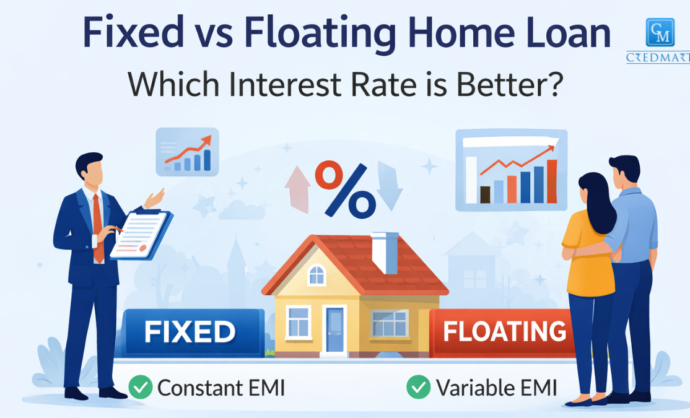
Choosing between a fixed and floating home loan is one of the most important decisions when taking a home loan. Understanding how fixed and floating interest rates work helps you choose the right option based on your financial goals and market conditions
Both fixed vs. floating home loan interest rates have their own set of advantages and disadvantages, and most borrowers are often left confused about which is better and why. Both have various pros and cons, and their long-term implications on your finances might be different.
Knowing how they work can guide you to select what best fits your income, financial objectives, and current market conditions. Let’s see everything simply
Fixed Floating Home Loan: What It Means
When you take a home loan, the lender charges interest on the borrowed amount. This interest rate can either remain constant or change over time based on market conditions.
There are two common types of home loan interest rates:
-
Fixed interest rate
-
Floating interest rate
The type of rate you choose affects your EMI amount, repayment schedule, and total interest paid.
What Is a Fixed-Rate Home Loan?
A fixed-rate home loan has an interest rate that remains constant throughout the loan tenure or for a specific period. Your EMI stays the same even if market interest rates change.
Features of Fixed Interest Rate
-
EMI remains constant during the loan period
-
Protection from rising interest rates
-
Easy financial planning
-
Usually slightly higher than floating rates
Benefits of Fixed-Rate Loans
A fixed interest rate makes budgeting easier because your monthly payments remain predictable. It protects you from rising market interest rates and provides long-term financial stability.
Limitations
Fixed interest rates are generally higher than floating rates. If market interest rates fall, you may not benefit from the reduction.
What Is a Floating Rate Home Loan?
A floating interest rate home loan changes based on market conditions. The interest rate is linked to benchmark rates set by lenders.
If market rates change, your EMI or loan tenure may also change.
Features of Floating Interest Rate
-
Interest rates change periodically
-
EMI may increase or decrease
-
Lower initial interest rate
-
Linked to market trends
Benefits of Fixed Floating Home Loan Options
Floating rates usually start lower than fixed rates, reducing the initial loan cost. If market rates fall, your EMI decreases or loan tenure reduces. These loans are flexible and often have lower prepayment penalties.
Limitations
Floating rates involve uncertainty. If interest rates increase, your EMI may also rise, making financial planning difficult.
Difference Between Fixed and Floating Home Loan
The main difference between fixed and floating home loan interest rates lies in how interest is charged and how your EMI behaves over time.
Interest Rate Stability
In a fixed-rate loan, the interest remains constant throughout the tenure. In a floating rate loan, the interest rate changes based on market conditions.
EMI Amount
Fixed-rate loans have stable EMIs, while floating-rate loans may have changing EMIs.
Risk Level
Fixed rates are predictable and less risky. Floating rates carry more risk due to market fluctuations.
Initial Interest Rate
Fixed rates are usually higher at the beginning, while floating rates start lower.
Financial Planning
Fixed rates help in easier budgeting. Floating rates require flexible financial planning.
Fixed or Floating Home Loan: Which Is Better?
There is no single answer. The right choice depends on your financial situation and risk tolerance.
Choose Fixed Interest Rate If
-
You prefer stable EMIs
-
You want predictable monthly expenses
-
Interest rates are rising
-
You want financial security and stability
Choose Floating Interest Rate If
-
You want lower starting interest rates
-
You expect interest rates to fall
-
You are comfortable with EMI changes
-
You want repayment flexibility
Factors to Consider Before Choosing
Before deciding between fixed vs. floating home loan options, consider the following factors.
Market Interest Rate Trends
If interest rates are rising, fixed rates are safer. If rates fall, floating rates can save money.
Financial Stability
A stable income helps manage changing EMIs.
Loan Tenure
Floating rates may result in savings if market rates decrease during the loan period.
Risk Tolerance
Choose based on your comfort level with changing payments.
Can You Switch Between Fixed and Floating Rates?
Some lenders allow borrowers to switch between fixed and floating interest rates by paying a conversion fee. This flexibility helps borrowers adjust their loan according to market conditions.
Always check your loan agreement and charges before switching.
How to Choose the Right Interest Rate
-
Compare interest rates from different lenders
-
Read loan terms carefully
-
Consider your monthly budget and repayment ability
-
Understand market trends
-
Calculate the total loan cost, not just the EMI.
Making an informed decision can save significant money in the long run.
Before choosing a fixed or floating home loan, you can also check your home loan eligibility to understand how much loan amount you qualify for.
Conclusion
Understanding the difference between fixed vs floating home loan interest rates helps you make a smarter financial decision. Fixed rates offer payment stability, while floating rates provide potential savings with market changes.
The right choice depends on your financial goals, income stability, and market conditions. Compare your options carefully and choose a loan that matches your financial needs.
A well-planned decision today can make your home loan journey smoother in the future.
For official guidelines on home loan interest rates, you can visit the Reserve Bank of India website.
Credit Card EMI vs Personal Loan EMI – Wh
When you need quick money for a big purchase or an unex...
January 17, 2026

Lowest Personal Loan Interest Rates in 2025 â
One of the most common ways to deal with pressing finan...
August 18, 2025


