



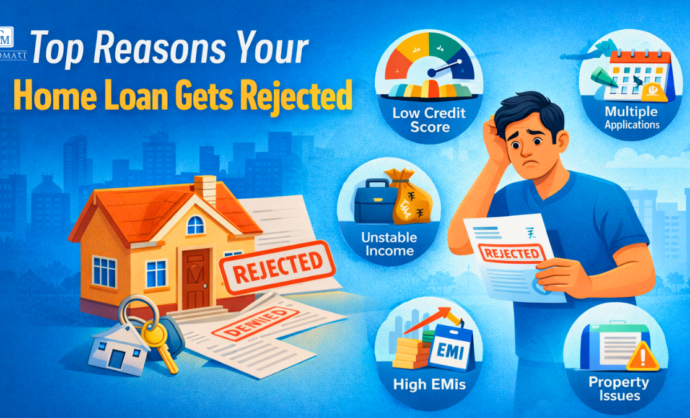
Buying a home is a big milestone, but many people face disappointment due to home loan rejection reasons they did not see coming. When a bank rejects your home loan, it usually happens because of issues related to credit score, income, EMIs, age, or property documents. Understanding why a home loan is rejected can help you avoid common mistakes and improve your approval chances next time.
Banks don’t reject applications randomly. There are clear checks behind every decision. Let’s break down the most common reasons why home loan is rejected and what you can do about them
1. Low Credit Score Is a Major Home Loan Rejection Reason
So you want to buy a house. You are having trouble getting a home loan. One of the reasons for this is that you have a low credit score. The people who give out home loans use your credit score to figure out if you are good with money. They look at your credit score to see how well you handle your money. This is a big part of the home loan approval process for home loans. Your credit score is very important when you apply for a home loan.
If your credit score is below 650, the banks will think you are not a borrower. This happens when you do not pay your EMIs on time, you default on your credit card payments, or you have loans that you have not paid back. The credit score will go down because of these things. Your credit score is like a report card for the banks to see how well you handle money so they can decide if they want to lend you money or not.
What things are you able to do?
Pay EMIs on time, clear overdue amounts, and avoid applying for too many loans at once.
2. High Existing EMIs
If you are earning a salary, you can still get rejected for a home loan because of high monthly payments. The bank will look at how much of your money is already going towards paying back other loans. They want to know if you have money left to pay for the home loan. This is why high monthly EMIs can be a problem when you apply for a home loan. The bank checks your income. They see how much of it is already being used to pay back other debts like car loans or personal loans, and then they decide if you can afford to pay for the home loan.
When a big part of your salary is spent on paying back things, like car loans, personal loans, or credit cards, it seems like you do not have a lot of money left to pay back debts. This means your ability to repay debts, like car loans, personal loans, or credit cards, is not very strong.
Tip:
Try closing small loans or reducing EMIs before applying for a home loan
3. Unstable Income or Job History
When you want to borrow money, lenders like to see that you have an income. This means that if you keep changing jobs a lot or if there are times when you are not working, lenders might think twice about giving you a loan. The same thing happens if you own a business and your income from that business is not always the same. Lenders do not like to see these kinds of things because they want to know that you can pay them back. So lenders prefer people who have an income, from a job or a business that always makes about the same amount of money.
Self-employed people often have a problem when they try to get a home loan. The problem is that they do not always get the same amount of money each month. This is what we call cash flow. For self-employed individuals, irregular cash flow is a common issue when it comes to getting a home loan approved.
What things are helpful
At least 2–3 years of steady income history improves trust with lenders.
4. Age Factor
Your age is a factor when it comes to home loans. If you are really close to retiring, the bank gets a little worried. They think about whether you will be able to pay back the loan. The bank wants to know if you have time to repay the home loan before you retire. A home loan is a commitment, and the bank wants to make sure you can handle it.
When you have a shorter loan tenure, you will have to pay money every month. This is because you have to pay back the loan in a time. So you will have equated monthly installments, or EMIs. This can actually reduce how much loan you are eligible for. A shorter loan tenure means higher EMIs for your loan, which can reduce your loan eligibility.
Solution:
Applying earlier or adding a younger co-applicant can help.
5. Property-Related Issues
Sometimes the problem is not you. The property. Banks may reject a loan if they do not like something about the property. The property is the issue here. Banks may reject a loan for the property if:
* the property is not worth much as the loan
* the property has some problems with it
* the property is in an area
Banks look at the property very carefully when they decide to give a loan for the property. The property has to be good enough for the banks to give a loan for the property.
The property has some problems with the law. The property is having these issues. People are talking about the problems that the property has with the law. The property is in a spot because of these legal issues.
The person who is supposed to build things is not allowed to do the job. The builder does not have permission to work on this project. The builder is not approved.
Documents are incomplete
People often get their home loan rejected for this reason. It is usually not noticed. This home loan rejection reason is very common.
Always verify property approvals before paying a token amount.
6. Incomplete or Incorrect Documents
Small mistakes can cause issues. If you do not have the income papers, or if the PAN details are wrong, or if the addresses do not match, this can slow down your loan, or they might not give you the loan at all. Your loan application can be. Rejected because of these small errors, like missing income proofs or incorrect PAN details or mismatched addresses.
Banks need clear and accurate information to process approval smoothly.
7. Too Many Loan Applications
Applying to a lot of banks all at once might seem like an idea, but it is not good for your credit score. When you do this, the banks look at your credit report times. This makes the banks a little worried about lending money to you. Multiple credit inquiries from banks make lenders cautious about the credit scores of people, like you, who are applying to banks.
According to RBI guidelines and major banks, maintaining a healthy credit score is crucial for loan approval.
This can sometimes become an issue when you are trying to get a home loan approved. You do not expect it to happen. It does. The home loan approval process can be really tough. The home loan is something that you really need. You want the home loan approval to go smoothly. The home loan approval can be a problem.
Final Thoughts
A home loan rejection does not mean your dream is over. Most home loan rejection reasons are fixable with better financial planning, timely repayments, and proper documentation. Review your profile, correct the gaps, and apply again with confidence. Small improvements today can make your home buying journey smoother tomorrow.
By understanding the most common home loan rejection reasons, borrowers can avoid repeated rejections and plan their finances more effectively before applying again.
If you are planning to apply soon, also read our guide on home loan eligibility and EMI calculation to prepare better.

Personal Loan vs Salary Overdraft Loan: Which
When faced with urgent financial needs, many individual...
August 27, 2025

Lowest Personal Loan Interest Rates in 2025 â
One of the most common ways to deal with pressing finan...
August 18, 2025


